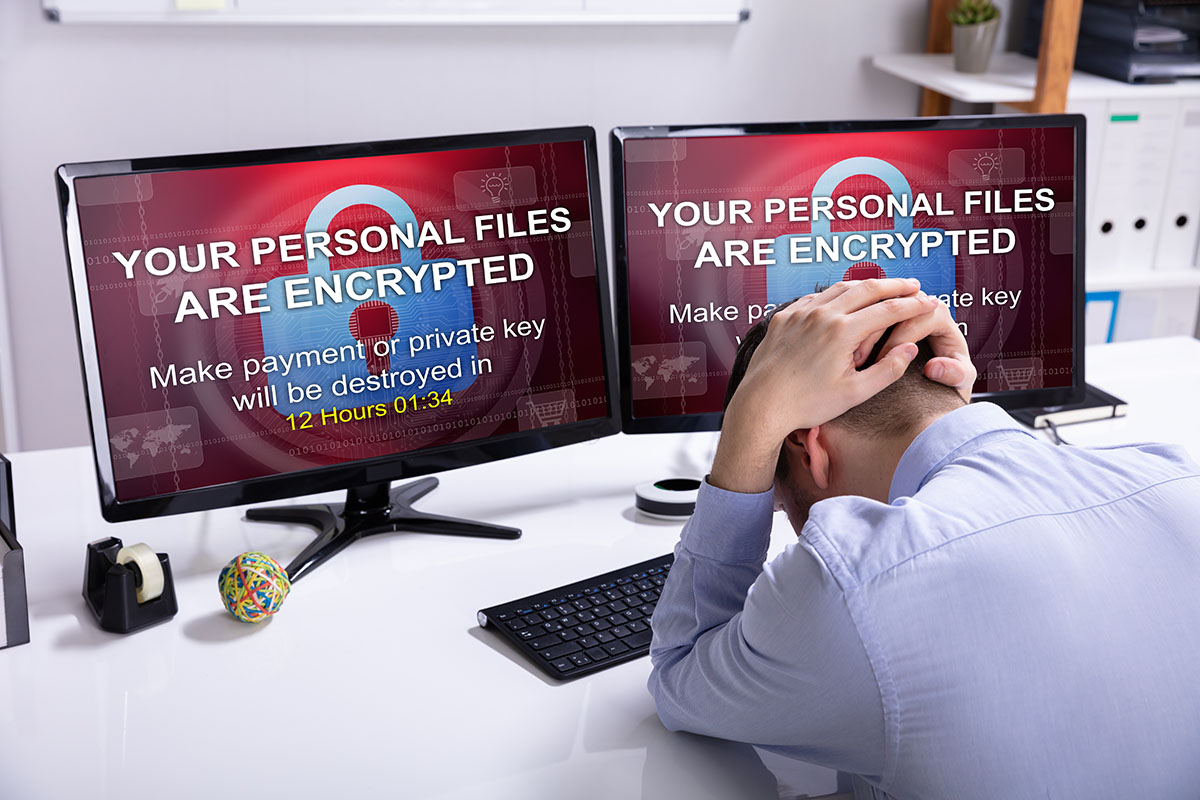
Non-profits run on trust. Donors give because they believe in the mission, and because they trust the organization to spend that money wisely and keep their information safe. That trust is the single most valuable thing a non-profit owns. It’s also, frustratingly, one of the easiest things a ransomware attack can wipe out in a single weekend.
Plenty of nonprofit leaders assume hackers only go after big corporations with deep pockets. That’s backwards. Ransomware gangs are opportunistic, they go where the defenses are thin and the payoff looks likely, and non-profits often fit that description better than anyone wants to admit. When an attack lands, it isn’t just an IT headache to route to the help desk. It can drain an organization’s finances, stall programs people depend on, and damage its standing with the very community it was built to serve.
Why Are Non-Profits Such an Attractive Target?
Ransomware crews run their operations like a business, they look for the easiest path to the biggest payout. Non-profits, unfortunately, check almost every box on that list. Here’s why.
Underfunded IT budgets are usually the first crack in the armor. Non-profits run lean by design, every dollar gets pushed toward the mission, so IT and cybersecurity often get filed under “overhead to cut” rather than “investment to protect.” Industry estimates commonly put nonprofit technology spending somewhere in the 1-4% range of overall budget, well below what most for-profit organizations allocate. The result shows up in aging servers, software that hasn’t been patched in months, and security tools that stopped receiving updates years ago.
Highly sensitive data is another reason non-profits look appealing to an attacker. Donor management platforms are packed with personally identifiable information (PII): names, home addresses, giving histories, sometimes payment details. Layer in financial records tied to endowments and grant funding, and you’ve got a dataset worth real money on the dark web.
Ransomware operators know this, which is why “double extortion” has become standard practice: encrypt the files, then threaten to publish them unless the ransom gets paid.
Then there’s what amounts to a high “willingness to pay.” Attackers know a non-profit can’t just close its doors for a week while IT sorts things out. Every day the donor database stays encrypted is a day donations don’t get processed. Every day client records are locked is a day someone who needs services doesn’t get them. That pressure pushes organizations toward paying.
The biggest lever an attacker holds, though, is reputational. It’s the kind of story that makes existing donors quietly stop giving and makes new donors hard to recruit. Attackers know that threat alone is often enough to get a check cut, which is exactly why they lead with it.
The Flaw of “Break-Fix” IT in a Non-Profit Environment
A lot of non-profits still run on an hourly, “break-fix” IT setup, you call someone when the network goes down, pay by the hour (often somewhere in the $125-$200 range for an outside contractor), and hope the invoice doesn’t hurt too much. On a tight budget, that looks like the responsible choice. For cybersecurity specifically, it’s close to the worst model an organization could pick.
That model is reactive by design, it does nothing until something is already broken. An hourly consultant has no financial reason to do the unglamorous, unbillable work that actually keeps a network safe: 24/7 monitoring, patching known vulnerabilities before attackers find them, and confirming your backups actually restore when you need them. They get paid once your files are encrypted and your donor list is sitting on someone else’s server. At that point you’re looking at an emergency bill that can run into tens of thousands of dollars in labor alone, while your programs sit frozen mid-crisis.
The Solution: Flat-Rate Managed IT Services
Protecting a non-profit means flipping the model, trading reactive fire-fighting for proactive defense. That’s the entire premise behind a flat-rate Managed IT Services (MSP) arrangement: instead of an unpredictable hourly bill, you pay one fixed monthly fee, commonly somewhere in the range of $100 to $200 per user depending on the provider and what’s bundled in, and the MSP keeps watch around the clock.
Under this arrangement, the MSP’s incentives line up with yours instead of working against them. They’re paid a flat fee to keep your network running and secure, period. If ransomware gets through, that’s a loss on their end too: they have to pour their own technicians’ hours into rebuilding systems and restoring backups without billing extra for it. So instead of waiting around for a fire to put out, they’re motivated to spend that time upfront on the patching, monitoring, and backup checks that keep the fire from starting at all.
A solid flat-rate managed IT plan for a non-profit isn’t a wish list of extras, these layers are the non-negotiable baseline:
24/7 Monitoring and Proactive Maintenance
Around-the-clock eyes on your network, watching for unusual activity and pushing out security patches before an attacker gets the chance to use them against you.
Managed Endpoint Security
Installing and actively managing advanced threat-detection software, on every laptop, desktop, and server in the building.
Multi-Factor Authentication (MFA)
Still the single most effective defense against compromised passwords. Microsoft has reported that MFA blocks more than 99% of automated account-compromise attempts, and it’s one of the cheapest controls there is to turn on, yet a surprising number of small organizations still haven’t flipped the switch.
Verified, Off-Site Data Backups
This is your last line of defense, and the one that actually lets you say no to a ransom demand. The standard here is the 3-2-1 rule, three copies of your data, on two different types of media, with one copy stored off-site and isolated from your main network. Get that right, and an attack that could have been a catastrophe becomes a rough week instead of a closed door.
FAQs
Our non-profit is already stretched thin financially, can we really justify the cost of managed IT services?
Honestly, the bigger risk is not having it. Industry estimates commonly put the all-in cost of a ransomware incident, the ransom demand, legal fees, business interruption, and the donor trust you may never fully win back, well into six figures, which is more than enough to close a small non-profit’s doors for good. A flat-rate IT plan, by contrast, is a fixed number you can put in next year’s budget right alongside rent and payroll. Treat it as the baseline cost of operating safely today, not an optional upgrade.
One of our staff members is pretty handy with computers, isn’t that enough to keep us safe?
It’s a common assumption, and a risky one. The “accidental IT person” can usually get a stuck printer working again, but fixing a printer and stopping a ransomware crew call for completely different skill sets. They typically don’t have access to enterprise-grade tools, endpoint detection platforms, 24/7 monitoring dashboards, threat-intelligence feeds, or the hours it takes to track a threat landscape that shifts almost weekly. Leaning on a well-meaning generalist for your cybersecurity is a bet most non-profits can’t afford to lose.
Our data is already in the cloud, doesn’t that mean it’s automatically secure?
Not entirely, and this trips up a lot of well-meaning boards. Cloud providers like Microsoft (Azure, Microsoft 365) and Google (Google Workspace) work under what’s called the “shared responsibility model”: they secure the infrastructure, the servers, the data centers, the physical security, and you’re responsible for what happens inside your account. That means strong, unique passwords, multi-factor authentication (MFA) turned on for every user, permissions set up so staff only see what their role requires, and backups of your cloud data kept separately from the live environment. Here’s the part that catches people off guard: if one staffer clicks a phishing link and hands over their login, an attacker can delete or encrypt your files from inside a perfectly secure Microsoft or Google data center. The infrastructure was never the weak point, the account was.
How does a managed IT service actually protect our donor endowment?
Two ways, and the second one matters more than most boards realize. First, it keeps an attack from draining your operating reserves directly, through a ransom payment, emergency forensic consulting, or weeks of staff overtime spent rebuilding systems by hand. Sophos’s annual “State of Ransomware” survey has repeatedly found that recovery costs alone, without paying any ransom, commonly run into six figures for small and mid-sized organizations, money that should have gone to programs, not incident response. Second, and this is the part that does lasting damage to an endowment: it protects the donor. A major donor who learns their gift information sat exposed because of an unpatched server isn’t going to feel better about an apology letter.
Protecting Your Mission by Protecting Your Data
A non-profit exists for one reason, the mission. Every grant dollar, every volunteer hour, every staff position is supposed to point back to that. Ransomware doesn’t just lock up files; it pulls all of that sideways. Picture a mid-sized non-profit that loses access to its donor database for two weeks during its spring appeal, that’s not an abstract IT glitch, that’s the campaign that was supposed to fund the summer program, gone. Recovery costs eat into the operating budget, services pause while staff try to reconstruct records by hand, and donors start asking questions nobody wants to answer. None of that is hypothetical, it’s the routine aftermath of a successful attack on an organization that wasn’t ready for one. That’s why proactive, flat-rate IT management belongs in the program budget, not buried under “overhead.” It’s less an IT expense than insurance for the organization’s ability to keep doing the work it was built to do.
If you’re leading a non-profit, securing your donor and operational data isn’t a someday item, it’s part of keeping the mission funded. IPM Computers works with non-profits on exactly this: flat-rate managed IT built to catch the gaps before they turn into a front-page problem or a hard conversation with your board. Reach out and we’ll walk through where your organization stands right now, so you can spend less time worrying about servers and more time doing the work you started this for.